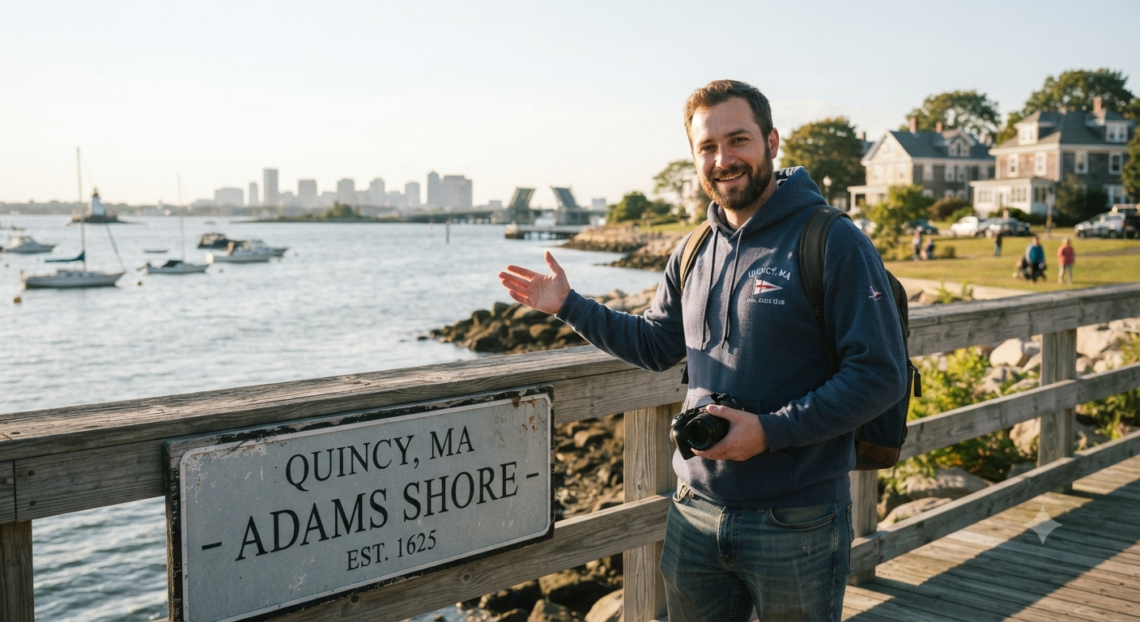
Searches for Gabriel Niejadlik Quincy MA appear to originate from a heartwarming Massachusetts news story involving a Yorkshire terrier named Rex. The dog was reunited with the Niejadlik family approximately 11 years after disappearing from their Boston home.
That reunion is real and was covered by established news publications. However, much of the biographical material subsequently published about Gabriel is not supported by detailed public records or original reporting.
The distinction matters. Gabriel is not known as a celebrity, politician, professional athlete, or established public figure. His name entered public reporting because he was one of the family members who met Rex after the dog’s extraordinary recovery.
This article separates the documented facts from assumptions, retellings, and narrative embellishments. It also examines the practical lesson at the centre of the story: why registering and maintaining a pet’s microchip can still bring an animal home many years later.
Who Is Gabriel Niejadlik of Quincy, Massachusetts?
The limited trustworthy information available connects Gabriel to the Niejadlik family and the 2022 reunion with Rex. Original reports focused primarily on Rex, the dog’s owner, the animal-control officer who found him, and the role of microchip technology.
There is no authoritative public biography documenting Gabriel’s career, education, professional achievements, net worth, personal relationships, or current activities. Websites presenting detailed personality assessments or predictions about his future should therefore be treated cautiously.
The responsible description is simple: Gabriel was a young member of a Massachusetts family featured in a human-interest news story about a long-lost pet.
This may sound less dramatic than the profiles found on some trend-focused websites. It is, however, considerably more accurate.
Why People Are Searching for the Name
Interest in Gabriel Niejadlik Quincy MA likely grew after later websites transformed the pet-reunion story into individual profile content. Those pages often positioned Gabriel as the emotional centre of a broader story about family, resilience and second chances.
The original reporting did not establish him as an independent public personality. It described a family experiencing an extremely unusual reunion.
This creates an important search-intent issue. Someone entering the name may be looking for:
- The identity of the person mentioned in the Rex reunion
- Information about the Niejadlik family
- The story of the dog missing for 11 years
- Confirmation that the viral reunion actually happened
- Details about how the dog’s microchip led to his return
- Clarification of claims published by later biography websites
A useful page must answer those questions without manufacturing a personal history.
The Real Event Behind Gabriel Niejadlik Quincy MA Searches
The documented story began long before it became a viral reunion.
Rex, a Yorkshire terrier, disappeared from his family’s Boston home when he was still young. His owner, Marzena Niejadlik, reported that the dog had been taken after getting outside. The family searched but could not locate him.
Years passed. Hope naturally became harder to maintain.
Then, in April 2022, an animal-control officer in Stoughton, Massachusetts, responded to a report involving a loose Yorkie. The dog was reportedly in poor condition and needed food, water and cleaning.
The officer scanned him for a microchip. The chip identified the dog as Rex and connected him to information associated with Marzena Niejadlik. When the officer called, Marzena explained that Rex had disappeared 11 years earlier.
That single scan changed the outcome of a decade-old missing-pet case.
A Reunion That Seemed Almost Impossible
Rex was approximately 12 years old when he was recovered. Because he had been missing for nearly his entire life, the call from animal control was understandably difficult for the family to believe.
Marzena had continued to hope that Rex might eventually be found, even as the likelihood appeared to decline with every passing year. The dog also carried emotional significance because he had originally been brought into the family after the unexpected death of a relative.
After his identity was confirmed, Rex was reunited with Marzena at the Stoughton Police Department. He then went home and met the children who had not been part of his original life with the family.
The reunion was covered by Boston-area news organizations and later received wider attention from outlets including People.
What Was Gabriel’s Role in the Rex Reunion?
Gabriel’s relevance comes from his place within the family, not from a separate public career or achievement.
Later online articles describe him as a child who understood the emotional importance of the telephone call and recognised the possibility that the recovered animal might be Rex. These accounts present his reaction as a bridge between the family’s past and present.
The broader point is plausible: a child born after a pet disappeared would know the animal primarily through photographs and family stories. Meeting that pet years later would turn inherited family history into a real experience.
However, writers should avoid expanding this moment into unsupported claims about Gabriel’s personality, emotional development, private life, ambitions, or future. A brief appearance in a human-interest report does not provide enough evidence for a comprehensive biography.
What Can Be Reported Responsibly?
A careful summary can say that:
- Gabriel was part of the family that welcomed Rex home.
- He appears in reporting connected to the reunion.
- The dog had disappeared many years before the children met him.
- The experience connected a younger generation with an older family story.
- Public information about Gabriel beyond this event is extremely limited.
Anything more specific requires a reliable, attributable source.
Verified Facts Versus Online Speculation
One of the most valuable ways to understand this topic is to compare original reporting with later profile pages.
The original reports provide concrete details: the dog’s name, breed, approximate age, disappearance, microchip scan, owner and reunion. These details were attributed to animal-control personnel, the police department and direct comments from Rex’s owner.
Some later articles add broad claims about Gabriel’s upbringing, community influence, emotional qualities and potential future advocacy. One even speculates about whether he might enter public life or become involved in lost-pet awareness, despite acknowledging that such an outcome is unknown.
Those additions should not be presented as established facts.
A Practical Verification Test
Readers evaluating any article about Gabriel Niejadlik Quincy MA should ask four questions:
- Does the article identify an original source?
Look for reporting from recognised newsrooms, public agencies or attributed interviews. - Does the source actually support the claim?
A citation about Rex’s recovery does not verify claims about someone’s education, personality or career. - Is fact separated from interpretation?
Statements such as “the reunion symbolises hope” are commentary, not biographical evidence. - Does the article respect the person’s privacy?
Publishing unnecessary details about a private young person adds risk without improving the story.
This source-evaluation framework is more valuable than simply repeating every detail found in search results.
Why the Microchip Was the Most Important Part of the Story
The central lesson from the Niejadlik family’s experience is not internet fame. It is permanent pet identification.
A microchip contains a unique identification number. When a veterinarian, shelter employee or animal-control officer scans the chip, the number can be used to determine which registry may hold the owner’s contact details.
A chip is not a GPS tracker. It does not show a pet’s location or allow an owner to follow the animal in real time. It only becomes useful after someone finds and scans the animal.
In Rex’s case, that process worked after approximately 11 years. The Stoughton officer scanned him, found the ownership record and contacted the family. The police department specifically highlighted microchip technology as the reason the reunion was possible.
A Microchip Must Be Registered
Implantation alone is not enough.
The American Veterinary Medical Association advises owners to register the chip, keep their contact information current and ask a veterinarian to check the chip periodically. A chip linked to an old telephone number or incomplete registration may not lead rescuers to the current owner.
The American Animal Hospital Association also operates a lookup tool that helps users identify which participating registry holds information for a particular microchip number. The tool identifies registries rather than displaying an owner’s private contact information.
Massachusetts emergency-preparedness guidance similarly advises pet owners to ensure that the address and telephone number associated with a microchip remain current.
Pet Microchip Checklist
Owners can reduce the risk of an untraceable registration by completing these steps:
- Ask a veterinarian or shelter to scan the pet and confirm the chip number.
- Identify the company or registry connected to that number.
- Confirm that the chip is registered to the correct owner.
- Update telephone numbers, email addresses and home addresses.
- Add a trusted secondary contact when the registry allows it.
- Recheck the information after moving or changing a telephone number.
- Keep recent photographs showing the pet’s appearance and markings.
- Continue using a collar and visible identification tag.
A microchip should support a wider recovery plan, not replace one.
What the Story Teaches About Lost-Pet Recovery
The recovery of Rex demonstrates that time does not automatically erase the possibility of reunification.
Most missing-pet cases will not remain unresolved for 11 years. Yet the permanence of the chip allowed a future animal-control officer to connect the dog with a record created much earlier.
Several practical lessons emerge.
Identification Must Outlast Temporary Circumstances
Collars can break, tags can fall off and printed telephone numbers can become unreadable. A properly functioning microchip remains beneath the animal’s skin and provides a durable identification number.
Its value, though, depends on the quality of the linked registry record.
Found Animals Should Be Scanned
A friendly lost dog may appear abandoned or may have been missing for a long period. Taking the animal to a veterinary clinic, shelter or animal-control agency for scanning can reveal information that is not visible externally.
The person who finds the animal should not assume that the lack of a collar means the lack of an owner.
Old Records Can Still Matter
The Niejadlik family’s case worked because an identification trail still existed years after Rex disappeared. That makes record maintenance essential.
Pet owners should review registration details at least annually and after major life changes. These include moving, changing telephone providers, separating from a household member or appointing a new emergency contact.
The Privacy Problem With Keyword-Driven Biography Pages
The search ecosystem rewards websites that answer unusual name-based queries. Unfortunately, low-information searches can encourage publishers to stretch a small public reference into a full-length “biography.”
That is particularly problematic when the subject is a private person or was a child when the event occurred.
A responsible publisher should not invent:
- A career or professional title
- Personality characteristics
- Current residence details
- Educational history
- Relationship information
- Financial information
- Social-media accounts
- Future plans or ambitions
Absence of information is not a content gap that should be filled with guesses.
For this topic, the strongest editorial approach is to explain the verified Rex reunion, acknowledge the limits of public information and direct readers toward the practical pet-safety lessons supported by authoritative sources.
That approach is both more trustworthy and more aligned with E-E-A-T principles.
Frequently Asked Questions
Who is Gabriel Niejadlik from Quincy, MA?
Gabriel is publicly mentioned as a young member of the Niejadlik family connected to the 2022 recovery of Rex, a Yorkshire terrier that had disappeared around 11 years earlier. There is no reliable, detailed public biography establishing him as a public figure.
Why does Gabriel Niejadlik’s name appear online?
His name appears primarily because of news and later human-interest content concerning Rex’s reunion with the family. Subsequent websites expanded the event into profile-style articles, although many personal details remain undocumented.
What happened to the Niejadlik family’s dog?
Rex disappeared from the family’s Boston home while still young. Approximately 11 years later, an animal-control officer found a loose Yorkie in Stoughton, scanned his microchip and identified him as Rex. He was then returned to his owner.
Was Rex found in Quincy, Massachusetts?
No. Reliable coverage reports that Rex was found in Stoughton, Massachusetts. The broader family story has been associated online with Quincy and the Greater Boston area, which explains the geographic wording used in many searches.
Can a microchip track a lost pet’s live location?
No. A standard pet microchip is an identification device, not a GPS tracker. It provides a unique number when scanned, allowing a veterinarian, shelter or animal-control agency to identify the relevant registry and attempt to contact the registered owner.
Conclusion
The verified story behind Gabriel Niejadlik Quincy MA is not a conventional biography. It is the story of a Massachusetts family, a dog named Rex and a microchip record that remained meaningful after more than a decade.
Rex’s return shows why pet identification must be implanted, properly registered and regularly updated. It also illustrates why readers should distinguish original reporting from profile pages that add unsupported personal narratives.
Pet owners should act on the practical lesson now: locate the pet’s microchip number, identify the correct registry and confirm that every contact detail is current. That small administrative task could determine whether a missing animal finds its way home months—or even years—later.