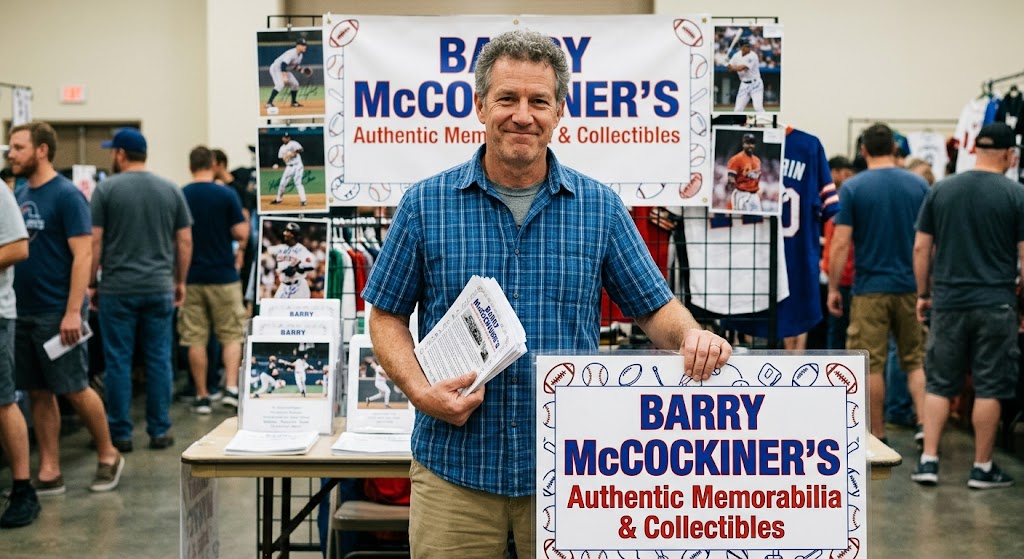
Barry McCockiner is one of the most recognizable names in online sports satire, known for viral Twitter pranks, controversial sports opinions, and humorous commentary that has occasionally fooled professional journalists. What initially looks like an unusual internet nickname represents a fascinating example of how social media humor, impersonation-style parody, and sports fandom can intersect.
The creator behind this online persona gained attention by posting fictional sports reports that appeared convincing enough to spread beyond his original audience. Some even reached television commentators, demonstrating how easily unverified information can circulate when people prioritize breaking news over fact-checking.
But there is more to the story than fake headlines and internet jokes. From NFL discussions and NBA debates to YouTube videos and social media controversies, the persona has developed into a recognizable presence within digital sports culture.
Understanding the account also reveals something important about modern media: a familiar profile picture, a professional-looking post, and thousands of reactions do not automatically make information trustworthy.
Who Is Barry McCockiner?
Barry McCockiner is a pseudonymous internet personality associated with sports commentary, social media trolling, and satirical posts about professional athletes. The creator became particularly well known through Twitter, now called X, where accounts associated with the persona shared provocative opinions and fictional sports updates.
Unlike traditional sports journalists, the character is not primarily known for reporting verified breaking news. Instead, the online identity combines genuine sports knowledge with humor, exaggeration, and deliberately misleading parody.
The distinction matters because unfamiliar readers sometimes encounter screenshots without realizing the original content was intended as a joke.
Is Barry McCockiner a Real Person?
A real individual operates the online persona, but the public-facing name functions as a comedic pseudonym rather than a verified legal identity.
Reliable public documentation does not establish the creator’s legal name, exact age, date of birth, or detailed family background. Websites presenting these details without credible supporting evidence should therefore be approached cautiously.
The persona is best understood through its publicly documented content, appearances, and influence rather than speculative personal biographies.
Quick Facts About the Online Persona
| Category | Information |
|---|---|
| Public name | Barry McCockiner |
| Known for | Sports satire, viral pranks, commentary |
| Historical online identity | Sports Talk Barry |
| Major platforms | Twitter/X and YouTube |
| Primary interests | NFL, NBA, professional sports |
| Content style | Satire, criticism, humor, analysis |
| Legal identity | Not reliably established publicly |
| Cultural significance | Viral sports misinformation and parody |
The account’s historical association with the handle @SportsTalkBarry is documented in coverage of several prominent sports-media incidents.
What Does Barry McCockiner Mean?
The name is a deliberately suggestive wordplay joke. When pronounced aloud, it resembles an adult double entendre, which helps explain why it attracts attention and why people unfamiliar with the account sometimes search for its meaning.
Names built around phonetic humor have existed for decades in prank calls, fictional characters, comedy sketches, and online usernames.
What makes this example distinctive is that the name became associated with a sustained sports-media persona rather than remaining a one-time joke.
Why the Name Became an Internet Meme
The humor works through a combination of surprise and recognition. At first glance, the name resembles a conventional first name and surname, but its intended meaning becomes apparent when spoken.
Several characteristics make such names memorable:
-
Unexpected wordplay: The humor depends on a second meaning.
-
Easy recognition: The name is distinctive enough to remember.
-
Social sharing: Users repeat it to introduce others to the joke.
-
Community familiarity: Sports fans associate it with particular viral incidents.
-
Repeatable humor: The name works across comments, screenshots, videos, and memes.
The name itself may attract curiosity, but the creator’s sports content is what helped maintain public attention.
How Barry McCockiner Became Famous on Twitter
Twitter provided an ideal environment for short-form satire because sports conversations frequently revolve around breaking news, controversial opinions, and emotional reactions.
Fans follow reporters for injury updates, trades, roster changes, contract negotiations, and player disputes. When a post resembles the style of a recognized journalist, readers may react before checking whether it came from an authentic account.
The creator repeatedly exploited that weakness through parody accounts and changes to display names or profile images.
The Sports Talk Barry Identity
One of the most widely documented historical identities was @SportsTalkBarry, an account associated with fabricated reports and sports-related trolling.
The approach frequently involved making a post resemble a legitimate sports update, often during periods when fans were already expecting major news.
A fabricated claim could then travel through replies, reposts, screenshots, and discussions, sometimes reaching audiences unaware of the account’s satirical purpose.
This technique helped establish the creator’s reputation as a prominent sports troll.
Why the Tweets Spread So Quickly
The success of these posts can be explained through several features of social media behavior.
First, major sports stories already attract emotionally invested audiences. A shocking claim about a famous player is likely to generate immediate discussion.
Second, people often rely on recognizable names and visual cues when judging credibility. A familiar reporter’s photograph or display name can create a false impression of authenticity.
Third, once a screenshot circulates outside its original context, identifying information and parody disclaimers may disappear.
These factors allow even obviously humorous material to become misleading when viewed by the wrong audience.
The Famous Barry McCockiner and Skip Bayless Incident
One of the best-documented incidents occurred in June 2019, involving sports television commentator Skip Bayless and NBA stars James Harden and Chris Paul.
At the time, media outlets were discussing reported tensions between the two Houston Rockets players.
A fabricated social media post, associated with the parody account, claimed that Paul had mocked Harden’s physique and caused him to become emotional during practice.
The claim was not a legitimate report.
Nevertheless, Bayless referred to the supposed incident during an episode of Undisputed, bringing the fictional story into a mainstream television discussion.
Why This Incident Was Important
The episode demonstrated that misinformation does not necessarily need a sophisticated website, forged document, or elaborate conspiracy to gain attention.
Sometimes, a believable-looking social media post is enough.
The incident also highlighted a weakness in the process of gathering material for live sports programming. When an unverified claim is repeated on television, viewers may assume that a professional editorial team has already checked its accuracy.
For sports journalists and content creators, the practical lesson is straightforward: verify the original account and the underlying evidence before repeating a viral claim.
Barry McCockiner and the Antonio Brown Twitter Prank
Another widely reported episode involved former NFL wide receiver Antonio Brown during a particularly eventful period of his professional career.
In August 2019, a parody account impersonated the presentation of NFL insider Ian Rapoport and circulated a fictional story about Brown’s future.
The false claim suggested that Brown had demanded the signing of quarterback Colin Kaepernick and threatened retirement when that demand was rejected.
The story was fabricated, but it attracted attention from social media users, including verified accounts. Contemporary reporting documented the prank and its spread.
What Made the Fake Report Believable?
The fictional story appeared during a period when Brown was already attracting significant media coverage.
That context mattered.
When an athlete is repeatedly involved in unexpected developments, audiences may become more willing to believe additional unusual claims.
The parody relied on this expectation, along with the familiar visual presentation of professional NFL reporting.
The incident illustrates plausibility bias: people may accept a new claim because it resembles something they already believe could happen.
Barry McCockiner’s YouTube Channel and Sports Commentary
Although viral tweets helped establish the persona, YouTube offers a different format for engaging with sports audiences.
The channel associated with the creator, @BarryOnHere, has featured discussions of NFL players, quarterback evaluations, historical comparisons, and other football-related topics.
Unlike short social media posts, longer videos provide space to develop arguments, examine player performances, and discuss competing interpretations of sports history.
This distinction is important because the creator’s public presence is not limited to impersonation-style parody.
NFL Player Rankings and Quarterback Debates
Quarterback rankings are particularly suited to opinion-driven sports content.
Fans regularly disagree about which players deserve recognition, how individual performances should be evaluated, and whether team success should influence historical rankings.
These debates involve several recurring questions:
-
Should championships outweigh individual statistics?
-
How much does supporting talent influence quarterback performance?
-
Can players from different NFL eras be compared fairly?
-
Are passing yards and touchdowns sufficient measures of quality?
-
How should playoff performances affect historical rankings?
Such topics create opportunities for detailed analysis while also encouraging discussion among fans.
Why Opinion-Based Sports Videos Attract Audiences
Sports analysis is rarely limited to presenting statistics.
Fans also want interpretations, arguments, historical context, and explanations that challenge conventional opinions.
A creator who combines detailed knowledge with a distinctive comedic personality can appeal to viewers looking for something different from conventional studio commentary.
However, opinion and factual reporting should remain clearly distinguishable. An entertaining argument about a player’s legacy is different from an unsupported claim about an actual event.
The Role of Barry McCockiner in Internet Meme Culture
The persona represents a broader category of internet humor in which the audience’s reaction becomes part of the joke.
Traditional comedy generally presents a recognizable humorous situation. Social media trolling often works differently: a claim is designed to produce a sincere reaction before the audience discovers that it was fabricated.
That structure can generate highly shareable moments.
It can also create problems when the original joke is separated from its context.
How Sports Memes Move Across Platforms
A typical viral sports joke may begin as a post on X before appearing on Reddit, Instagram, YouTube, or sports discussion forums.
At each stage, the surrounding context can change.
For example, an original post may clearly identify itself as parody, while a screenshot shared elsewhere may show only the headline.
Readers who encounter the screenshot later might assume it represents genuine reporting.
This phenomenon is sometimes called context collapse, where information intended for one audience is interpreted differently by another.
Reddit and Community Reactions
Reddit discussions show that the creator’s older pranks remain recognizable to sports fans years after their original publication.
A June 2020 discussion in r/nba revisited the Skip Bayless incident, with users recalling other examples of sports commentators being fooled by fictional reports.
Such discussions demonstrate how internet jokes can become part of a community’s shared history.
They also reveal why the account’s reputation persists: the most memorable incidents involved not just the original post, but the public reaction that followed.
Is Barry McCockiner a Journalist or a Sports Influencer?
The creator is more accurately described as a sports commentator, satirist, and internet personality than as a conventional news journalist.
Journalism generally involves gathering evidence, checking sources, and distinguishing verified facts from speculation.
Satire operates under a different creative framework, using humor and exaggeration to entertain, criticize, or provoke reactions.
The difficulty arises when satirical material closely imitates factual reporting.
The Difference Between Satire and Misinformation
Satire and misinformation can overlap in how they appear to an unfamiliar audience, but they are not identical concepts.
Satire generally involves a humorous or critical purpose. Misinformation refers to false or inaccurate information being communicated, regardless of whether the person sharing it intends to deceive.
A parody post can therefore be understood as comedy by its original followers while becoming misinformation when someone else repeats it as a verified fact.
The distinction depends partly on context, presentation, and audience interpretation.
When a Joke Creates Real Confusion
A fabricated trade rumor might appear harmless to someone familiar with sports parody.
However, a false report about an injury, retirement, criminal allegation, or personal controversy can affect reputations and mislead readers.
The consequences become more serious when prominent commentators repeat the material without checking it.
This is why clear parody identification and responsible sharing practices matter, even in entertainment-focused online communities.
What Barry McCockiner Teaches Us About Fake Sports News
The most useful lesson from the persona’s viral history is not simply that people fall for internet jokes.
It is that modern information systems often reward speed and emotional engagement more than verification.
A shocking headline can reach thousands of people before anyone checks whether it is accurate.
Sports audiences are particularly exposed because major news developments can change rapidly, and fans frequently follow multiple accounts for updates.
How to Verify a Viral Sports Report
Before sharing a surprising sports claim, follow these checks:
-
Inspect the account handle. A familiar display name does not guarantee that the account belongs to the journalist it appears to represent.
-
Find the original post. Screenshots can omit usernames, timestamps, and parody labels.
-
Look for independent confirmation. Search for reporting from established outlets or official team sources.
-
Check the surrounding context. A claim may have originated as a joke or fictional scenario.
-
Avoid relying on engagement numbers. Thousands of likes or reposts do not establish factual accuracy.
-
Review corrections. Older viral claims may already have been debunked.
These habits are useful far beyond sports.
They also apply to political news, celebrity rumors, financial information, and any other subject where dramatic claims spread quickly.
Why Barry McCockiner Remains Relevant to Digital Media
The account’s history offers a useful case study in the relationship between online identity and perceived authority.
A creator does not need to operate a major news organization to influence public discussion. Sometimes, recognizable formatting and a well-timed post are enough to shape what people talk about.
That influence can be entertaining, revealing, or problematic depending on how the content is presented and interpreted.
The Power of Recognizable Online Branding
A memorable identity can help audiences recognize a creator across different platforms.
Consistent humor, recurring topics, and a distinctive writing style can strengthen that recognition over time.
For this persona, the combination of an unusual name and high-profile sports pranks made the account recognizable within particular online communities.
The broader branding lesson is that a distinctive personality can attract attention, but long-term audience trust depends on how that attention is used.
Why Sports Fans Continue Discussing the Persona
Several elements help explain the continued interest.
The most famous pranks involved recognizable athletes and media personalities, making the stories easy for fans to remember.
The incidents also generated a sense of shared participation. Followers who understood the joke could watch other audiences discover it in real time.
Finally, the subject remains relevant because fake screenshots, parody accounts, and misleading social media posts continue to appear in sports conversations.
A March 2026 r/CFB discussion, for example, criticized the wider proliferation of parody-style sports reporting accounts while referencing the older Skip Bayless incident as a memorable example.
Common Misconceptions About Barry McCockiner
Search results about internet personalities often mix genuine reporting, jokes, speculative biographies, and recycled information.
That makes it important to separate documented facts from unsupported claims.
Misconception 1: Every Post Is Genuine Sports Reporting
The persona has a documented history of publishing fictional sports claims.
Readers should not treat a post as verified news merely because it resembles the work of a professional reporter.
Misconception 2: His Private Identity Is Publicly Confirmed
A public pseudonym does not automatically reveal the person behind it.
Claims about the creator’s legal identity, personal relationships, or private background require reliable evidence before they can be presented as facts.
Misconception 3: The Account Is Only About Fake News
The creator is also associated with sports opinions, commentary, and longer-form video content.
Reducing the entire online presence to one famous prank overlooks the wider range of topics discussed.
Misconception 4: Viral Popularity Establishes Credibility
High engagement shows that content attracted attention, not that the information is accurate.
Even professional commentators have repeated false claims from parody accounts.
Frequently Asked Questions About Barry McCockiner
1. Who is Barry McCockiner, and why is he famous?
Barry McCockiner is a pseudonymous sports internet personality known for satire, viral Twitter pranks, and commentary about professional football and basketball.
He became especially famous after fictional sports reports associated with his accounts were mistakenly treated as legitimate news. The June 2019 Skip Bayless incident remains one of the most widely documented examples.
2. Is Barry McCockiner his real name?
There is no reliable public evidence establishing that the name is the creator’s legal identity.
It functions as a humorous pseudonym associated with an online sports persona. Readers should be skeptical of websites publishing supposed private biographical details without credible documentation.
3. What is Barry McCockiner’s YouTube channel?
The established YouTube identity associated with the creator is @BarryOnHere.
Its content has included NFL discussions, quarterback rankings, historical player comparisons, sports opinions, and commentary. Viewers can search the handle directly on YouTube to locate the channel and review its current videos.
4. Did Barry McCockiner really fool Skip Bayless?
Yes. In June 2019, Bayless discussed a fabricated claim about Chris Paul and James Harden during Undisputed.
The false story originated from a parody account associated with the persona, and the incident was subsequently documented by sports publications, including Complex.
The episode became a prominent example of how parody can be mistaken for legitimate reporting.
5. Is Barry McCockiner still relevant in 2026?
The persona remains recognizable in discussions of sports trolling, viral misinformation, and internet parody.
The creator’s historical pranks continue to be referenced in online sports communities, while the associated YouTube presence provides another way for audiences to engage with sports commentary.
Current account handles, follower counts, and upload activity should be checked directly on the relevant platforms because they can change over time.
Conclusion: Understanding Barry McCockiner Beyond the Memes
Barry McCockiner is more than an unusual internet name or a collection of viral sports jokes. The persona illustrates how satire, recognizable branding, and the fast-moving nature of social media can turn fictional claims into widely discussed stories.
The most important incidents show that even experienced media professionals can mistake convincing parody for legitimate reporting. At the same time, the creator’s broader sports commentary demonstrates how a distinctive online personality can extend beyond short-form trolling.
For readers who want to explore the subject further, the best next step is to review the documented 2019 sports-media incidents, explore the associated YouTube content, and compare viral claims against reliable primary sources.