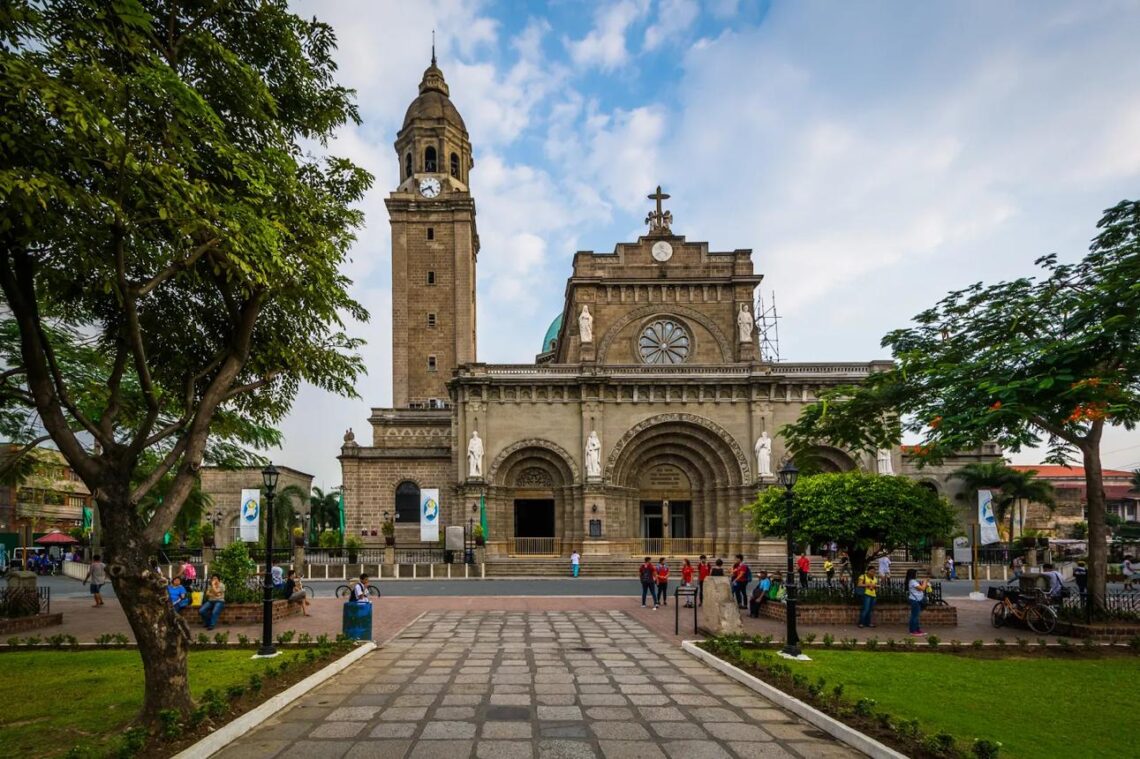
Manila is home to some of the Philippines’ most remarkable religious landmarks, where centuries of Catholic tradition meet extraordinary architecture, local devotion, and fascinating history. Whether you’re planning a spiritual pilgrimage, exploring Spanish colonial heritage, or searching for peaceful places to pray, the catholic churches in manila offer experiences that extend far beyond ordinary sightseeing.
From the centuries-old San Agustin Church in Intramuros to the magnificent Manila Cathedral and the devotional atmosphere of Quiapo Church, each destination tells a different story. Some are celebrated for their architectural beauty, while others attract thousands of worshippers seeking spiritual guidance, healing, and personal reflection.
This guide explores 12 noteworthy churches across the City of Manila, including their historical significance, distinctive features, locations, and practical travel considerations. You’ll also discover how to organize a church-hopping itinerary, what to wear, and how to experience these sacred spaces respectfully.
Why Manila Is One of the Philippines’ Most Important Catholic Destinations
Catholicism has shaped Manila’s religious identity, cultural traditions, architecture, and community life for more than four centuries. Spanish missionaries established churches throughout the city during the colonial period, creating religious centers that eventually became important landmarks.
Today, Manila remains the seat of the Archdiocese of Manila, with the Manila Cathedral serving as its principal church. Its historic districts contain parish churches, basilicas, shrines, and religious institutions associated with different periods of Philippine history.
The city’s Catholic heritage is particularly visible during Holy Week, Christmas, Marian celebrations, and major patronal feasts. These occasions bring together religious processions, traditional prayers, family gatherings, and public expressions of faith.
One distinctive Filipino tradition is Visita Iglesia, commonly practiced during Holy Week. Devotees visit multiple churches, often seven or fourteen, to pray and reflect on Christ’s Passion.
For travelers, these traditions provide valuable insight into the relationship between Catholic faith and Filipino culture.
12 Famous Catholic Churches in Manila You Should Visit
The following destinations represent different aspects of Manila’s religious heritage, from UNESCO-recognized architecture to deeply rooted devotional traditions.
1. Manila Cathedral – The Historic Heart of Philippine Catholicism


Location: Cabildo Street, Intramuros, Manila
The Manila Cathedral is among the most recognizable Catholic landmarks in the Philippines. Officially known as the Minor Basilica and Metropolitan Cathedral of the Immaculate Conception, it serves as the ecclesiastical seat of the Archbishop of Manila.
The cathedral’s history dates to 1571, although the present building was completed in 1958. Earlier structures suffered damage from earthquakes, fires, and warfare, making the cathedral’s repeated reconstruction an important part of its identity.
Its imposing façade, stone detailing, stained-glass windows, and spacious interior create a memorable architectural experience. The cathedral is also associated with major religious ceremonies and significant events in Philippine Catholic history.
Why visit: Ideal for religious history enthusiasts, architecture lovers, pilgrims, and first-time visitors exploring Intramuros.
2. San Agustin Church – A UNESCO World Heritage Treasure


Location: General Luna Street, Intramuros, Manila
San Agustin Church is one of the country’s most significant surviving Spanish colonial structures. Completed in 1607, the stone church is widely recognized as the oldest surviving stone church in the Philippines.
Its historical importance extends beyond its age. The church forms part of the UNESCO World Heritage listing Baroque Churches of the Philippines, recognized in 1993.
Inside, visitors encounter an impressive painted ceiling, elaborate religious artwork, historical tombs, and architectural details associated with the Spanish colonial period. The adjoining San Agustin Museum offers additional insight into religious art and Augustinian heritage.
Unlike many older buildings in Manila, the church survived the devastation of World War II, making it a particularly valuable witness to the city’s past.
Why visit: Best for exploring UNESCO heritage, colonial architecture, religious art, and Manila’s architectural history.
3. Quiapo Church – Home of the Devotion to the Black Nazarene


Location: Plaza Miranda, Quiapo, Manila
Quiapo Church, formally the Minor Basilica and National Shrine of Jesus Nazareno, is one of the country’s most important pilgrimage destinations.
The church is closely associated with the revered image of Jesus Nazareno, commonly called the Black Nazarene. Devotees gather throughout the year to offer prayers, attend Mass, and express their faith.
The annual Traslación on January 9 is among the Philippines’ most prominent religious processions. Large crowds accompany the sacred image through Manila, reflecting the devotion’s extraordinary cultural and spiritual importance.
Friday is another particularly significant day for devotees, and the surrounding streets can become extremely busy.
Why visit: Recommended for understanding Filipino Catholic devotion, pilgrimage traditions, and the religious life of Quiapo.
4. Binondo Church – A Historic Landmark in Manila’s Chinatown


Location: Plaza San Lorenzo Ruiz, Binondo, Manila
Binondo Church, also known as the Minor Basilica and National Shrine of San Lorenzo Ruiz, reflects the longstanding relationship between Chinese-Filipino communities and Catholicism.
The original church was established by Dominican missionaries in 1596. Although its structure changed over the centuries, its historical significance remains closely connected to Manila’s Chinatown.
The church is dedicated to Saint Lorenzo Ruiz, the first canonized Filipino saint, who was associated with Binondo. His life and martyrdom represent an important chapter in Philippine religious history.
Visitors can combine a church visit with an exploration of Chinatown’s traditional streets, restaurants, shops, and cultural landmarks.
Why visit: Excellent for travelers interested in Filipino-Chinese heritage, religious history, and cultural exploration.
5. Santa Cruz Church – A Spiritual Landmark Near Chinatown


Location: Plaza Santa Cruz, Santa Cruz, Manila
Santa Cruz Church stands near the entrance to Manila’s Chinatown district. Its history dates to the early seventeenth century, when Jesuit missionaries established a religious community in the area.
The present church reflects rebuilding after wartime destruction. Its façade and bell tower contribute to the distinctive historical character of the Santa Cruz neighborhood.
The church is particularly associated with devotion to Our Lady of the Pillar, whose image is honored by local Catholics.
Its central location makes it a convenient addition to a walking itinerary covering Binondo, Quiapo, and the surrounding historic commercial districts.
Why visit: Suitable for travelers seeking a quieter religious stop while exploring central Manila.
6. San Sebastian Church – The Famous All-Metal Gothic Church


Location: Plaza del Carmen, Quiapo, Manila
San Sebastian Church stands apart from Manila’s predominantly stone and concrete colonial churches.
Completed in 1891, the basilica is celebrated for its prefabricated metal construction and Gothic Revival architecture. Its soaring towers, pointed arches, and stained-glass windows create a distinctly European-inspired appearance.
The building is especially important to architectural historians because of its unusual construction system and conservation challenges. Its metal structure requires specialized preservation efforts to address corrosion and structural deterioration.
Inside, visitors can appreciate its vaulted forms, decorative details, and atmosphere of solemnity.
Why visit: An essential destination for architecture enthusiasts, photographers, and visitors interested in historic engineering.
7. Malate Church – A Beautiful Marian Shrine


Location: M. H. del Pilar Street, Malate, Manila
Malate Church, also known as the Church of Our Lady of Remedies, is one of the city’s distinctive historic religious buildings.
Its roots reach back to the sixteenth century, although the structure has undergone significant changes and restoration. The church is particularly recognizable for its unusual façade and blend of architectural influences.
Dedicated to Nuestra Señora de los Remedios, or Our Lady of Remedies, it continues to serve the Catholic community of Malate.
The surrounding district offers an interesting contrast between Manila’s older religious heritage and its modern urban environment.
Why visit: Ideal for Marian devotees and travelers exploring the Malate and Manila Bay areas.
8. Paco Church – A Peaceful Historic Parish


Location: Paco, Manila
The San Fernando de Dilao Parish Church is a historic Catholic parish associated with the development of the Paco district.
Its parish history reflects the changing communities of Manila, including the area’s connections with Japanese residents during the Spanish colonial era.
The church remains an active place of worship and community life. Compared with major pilgrimage sites such as Quiapo, it may offer visitors a more neighborhood-centered experience.
Travelers exploring Paco can also visit nearby historical sites to better understand the district’s cultural background.
Why visit: A worthwhile stop for visitors interested in parish history and local religious communities.
9. Santa Ana Church – Home to an Important Marian Devotion


Location: Pedro Gil Street, Santa Ana, Manila
Santa Ana Church, also known as the National Shrine of Our Lady of the Abandoned, is one of Manila’s most historically significant parish churches.
The present stone church was completed in 1725 and is closely associated with Franciscan missionary activity.
Its interior contains religious artwork and architectural features that preserve aspects of colonial-era Catholic tradition. The shrine honors Our Lady of the Abandoned, a Marian devotion with a longstanding following among local Catholics.
The Santa Ana district also has a rich archaeological and cultural history, giving visitors additional reasons to explore beyond the church grounds.
Why visit: Especially rewarding for heritage travelers, Marian devotees, and visitors interested in lesser-known historical districts.
10. Tondo Church – A Major Center of Devotion to Santo Niño


Location: Tondo, Manila
Tondo Church, formally Santo Niño de Tondo Parish Church, is closely connected to one of Manila’s enduring religious devotions.
The parish dates to the sixteenth century and has played an important role in the spiritual life of Tondo’s residents.
Its central devotional image is the Santo Niño, representing the Child Jesus. Annual festivities dedicated to the Santo Niño bring together religious observances, neighborhood celebrations, and local traditions.
Tondo Church offers visitors an opportunity to experience a community-centered expression of Catholic faith.
Why visit: Recommended for those interested in Santo Niño devotion and Manila’s neighborhood religious traditions.
11. San Miguel Church – A National Shrine Dedicated to Saint Michael


Location: J. P. Laurel Street, San Miguel, Manila
San Miguel Church is officially known as the National Shrine of Saint Michael and the Archangels.
Situated near the Malacañang area, the church has a distinctive identity within Manila’s religious landscape. It is associated with devotion to Saint Michael and the archangels, who occupy important roles in Catholic tradition.
Its architecture and religious artwork make it a meaningful stop for visitors exploring the San Miguel district.
The church also offers a perspective on the relationship between Manila’s religious institutions and its historic civic neighborhoods.
Why visit: A meaningful destination for devotees of Saint Michael and visitors interested in religious art.
12. San Vicente de Paul Church – A Historic Church Near Adamson University


Location: San Marcelino Street, Ermita, Manila
San Vicente de Paul Church is associated with the Vincentian religious tradition and the surrounding educational community.
The church is located near Adamson University, an institution founded by the Adamson family and later administered by the Vincentians.
Dedicated to Saint Vincent de Paul, it reflects a Catholic tradition strongly associated with charity, service, and concern for people experiencing poverty.
Its accessible central location makes it a practical religious stop for those exploring the Ermita district.
Why visit: A good choice for visitors interested in Vincentian spirituality, Catholic education, and central Manila’s churches.
Quick Comparison of the Best Catholic Churches in Manila
Choosing where to go depends on whether you’re interested in history, architecture, religious devotion, or a peaceful environment.
| Church | District | Best Known For |
|---|---|---|
| Manila Cathedral | Intramuros | Archdiocesan history and architecture |
| San Agustin Church | Intramuros | UNESCO World Heritage status |
| Quiapo Church | Quiapo | Jesus Nazareno devotion |
| Binondo Church | Binondo | Saint Lorenzo Ruiz and Chinatown heritage |
| Santa Cruz Church | Santa Cruz | Our Lady of the Pillar |
| San Sebastian Church | Quiapo | Gothic Revival metal architecture |
| Malate Church | Malate | Our Lady of Remedies |
| Paco Church | Paco | Historic parish heritage |
| Santa Ana Church | Santa Ana | Our Lady of the Abandoned |
| Tondo Church | Tondo | Santo Niño devotion |
| San Miguel Church | San Miguel | Saint Michael and the Archangels |
| San Vicente de Paul Church | Ermita | Vincentian spirituality |
Map of Catholic Churches in Manila
The churches are spread across several historic districts. Grouping nearby destinations can help you spend more time exploring and less time traveling through Manila’s busy streets.
How to Plan a Catholic Church-Hopping Tour in Manila
Visiting multiple churches in a single day is possible, but a thoughtful route makes the experience considerably more enjoyable. Traffic, religious services, and walking conditions can influence how much time you need.
Half-Day Itinerary: Intramuros and Nearby Churches
For first-time visitors, the historic district of Intramuros is an excellent starting point.
-
Manila Cathedral: Begin with the city’s principal Catholic cathedral and explore its religious history.
-
San Agustin Church: Walk to this UNESCO-listed landmark and consider visiting the adjoining museum.
-
Santa Cruz Church: Continue toward the historic commercial district to experience a different side of Manila.
-
Binondo Church: Finish with a visit to Chinatown and enjoy the surrounding cultural attractions.
Allow approximately four to six hours, including transportation, short breaks, and time for prayer or sightseeing. The two Intramuros churches are particularly convenient to visit together.
Full-Day Itinerary: Historic Churches and Major Shrines
Travelers with a full day can add Quiapo Church and San Sebastian Basilica to the route. These destinations provide a contrast between popular devotional practices and unusual historic architecture.
Start early, especially on Fridays or major religious holidays. Instead of attempting all twelve churches in one day, prioritize five or six that match your interests.
Best Time to Visit Catholic Churches in Manila
The best visiting period depends on whether your priority is sightseeing, quiet reflection, or participation in religious celebrations.
Weekdays for a Quieter Experience
Weekday mornings are often convenient for exploring historic church interiors. However, Masses, weddings, funerals, and private religious activities may temporarily limit access.
For photography and architecture enthusiasts, daylight generally provides better opportunities to appreciate stained glass, façades, and interior details.
Holy Week for Religious Traditions
Holy Week is one of the most meaningful periods in the Philippine Catholic calendar. Churches become gathering places for prayer, liturgical celebrations, and Visita Iglesia.
Expect larger crowds, special schedules, and occasional restrictions on tourist access. Good Friday and Holy Thursday are particularly significant for many Filipino Catholics.
Christmas Season for Festive Worship
The Christmas season offers another memorable opportunity to experience local religious traditions. Simbang Gabi, the series of nine devotional Masses before Christmas, is especially important in Filipino Catholic culture.
These celebrations often begin in the early morning, although evening anticipated Masses are also offered in many parishes.
What Makes Manila’s Catholic Architecture Unique?
The architectural diversity of Manila’s churches reflects centuries of adaptation, rebuilding, and cultural exchange.
Spanish Colonial and Baroque Influences
Churches such as San Agustin demonstrate the influence of European religious architecture adapted to local conditions. Their substantial walls, decorative interiors, and carefully arranged spaces reflect both religious symbolism and practical building considerations.
The National Museum of the Philippines identifies San Agustin as a particularly important example of the country’s colonial architectural heritage. Its painted interior and stone construction remain defining characteristics.
Gothic Revival and Metal Construction
San Sebastian Basilica presents a striking alternative to traditional stone churches. Its metal structure was prefabricated in Belgium, transported to Manila, and assembled on site.
This construction approach makes the basilica an important example of nineteenth-century engineering and international architectural collaboration. Conservation specialists continue to recognize corrosion and moisture infiltration as significant preservation concerns.
Postwar Reconstruction
Many churches in Manila were damaged during World War II and subsequently rebuilt. Their current appearances therefore represent different historical periods rather than entirely untouched Spanish colonial architecture.
Manila Cathedral is an important example. Its present building was designed by Fernando Ocampo and consecrated in December 1958, incorporating historical inspiration alongside postwar architectural approaches.
Practical Tips for Visiting Churches in Manila
Religious buildings are active places of worship, so respectful behavior is essential even when visiting primarily for cultural or architectural reasons.
-
Dress modestly: Choose clothing appropriate for a sacred setting and follow any posted dress requirements.
-
Check Mass schedules: Services may affect access to certain areas.
-
Avoid flash photography: Ask permission before photographing worshippers, ceremonies, or restricted interiors.
-
Carry drinking water: Manila’s warm, humid weather can make extended walking uncomfortable.
-
Plan transportation: Walking is practical within Intramuros, while taxis, ride-hailing services, or public transportation may be more suitable between districts.
-
Protect personal belongings: Crowded areas and major religious celebrations require additional attention.
-
Respect prayer spaces: Keep conversations quiet and avoid interrupting religious activities.
If you’re visiting primarily to attend Mass, consult the individual parish’s official announcements before traveling.
For example, the Manila Cathedral’s published schedule lists weekday Masses at 7:30 AM and 12:10 PM, a Saturday Mass at 7:30 AM, and Sunday Masses at 8:00 AM, 10:00 AM, and 6:00 PM. These schedules can change for special celebrations.
Catholic Churches in Manila for Weddings, Baptisms, and Special Occasions
Several historic churches are popular settings for Catholic weddings, baptisms, and other sacramental celebrations.
San Agustin Church is particularly well known for its historical surroundings and elegant interior. Manila Cathedral is another prominent choice for couples seeking a ceremony in an architecturally significant religious setting.
However, beautiful architecture is only one consideration. Catholic weddings and baptisms involve parish requirements, preparation, documentation, and scheduling.
Before making arrangements, contact the relevant parish office to ask about available dates, sacramental eligibility, preparation programs, fees or donations, and photography rules.
Preserving Manila’s Historic Catholic Churches
The preservation of Manila’s religious landmarks involves more than maintaining attractive buildings. Many contain irreplaceable artworks, historical records, architectural features, and spaces associated with generations of religious practice.
Conservation can be especially challenging because of humidity, urban pollution, earthquakes, heavy visitor activity, and the aging of original materials.
UNESCO’s World Heritage Committee has also addressed tourism and traffic-management concerns affecting the San Agustin Church heritage area, highlighting the importance of balancing visitor access with long-term preservation.
Visitors can contribute by respecting restricted areas, avoiding contact with fragile surfaces, supporting authorized heritage programs, and following conservation guidelines.
Frequently Asked Questions About Catholic Churches in Manila
1. What is the most famous Catholic church in Manila?
Manila Cathedral, San Agustin Church, and Quiapo Church are among the city’s most famous religious landmarks, although each is known for different reasons.
Manila Cathedral is important as the seat of the Archbishop of Manila. San Agustin is internationally recognized for its architectural heritage, while Quiapo Church is celebrated for its devotion to Jesus Nazareno.
For first-time visitors, exploring all three provides a broad introduction to Manila’s Catholic identity.
2. What is the oldest Catholic church in Manila?
San Agustin Church in Intramuros is widely recognized as the oldest surviving stone church in the Philippines. Its present stone structure was completed in 1607 and remains one of the country’s most important historic religious buildings.
Although other Manila parishes trace their origins to earlier periods, their present structures have often been reconstructed following fires, earthquakes, or wartime damage.
This distinction between a parish’s founding date and the age of its surviving building is important when comparing historical churches.
3. Are Catholic churches in Manila free to enter?
Many active parish churches generally allow visitors to enter their worship areas without a standard admission charge, particularly during regular opening periods.
However, museums, guided heritage experiences, and certain special-access areas may require tickets or fees. San Agustin’s museum facilities, for example, should be treated separately from ordinary worship access.
Visitors should confirm current admission arrangements directly with each church before traveling.
4. Can tourists attend Mass at Catholic churches in Manila?
Yes. Tourists are generally welcome to attend public Catholic Masses, provided they respect the religious service and follow parish guidelines.
Visitors who are not Catholic may attend and observe the liturgy, but Holy Communion is ordinarily reserved for Catholics who meet the Church’s requirements for receiving it.
If attending a service for the first time, arrive early, follow the congregation’s general cues, and avoid photography during solemn moments unless explicitly permitted.
5. How many Catholic churches should I visit during a Manila pilgrimage?
There is no fixed number required for an ordinary personal pilgrimage. You can visit one church for quiet prayer or several churches as part of a planned religious journey.
During Holy Week, many Filipino Catholics practice Visita Iglesia by visiting seven or fourteen churches, often reflecting on the Stations of the Cross or other prayers.
If you have limited time, start with Manila Cathedral, San Agustin Church, and Quiapo Church. For a more extensive itinerary, include Binondo, Santa Cruz, and San Sebastian.
Conclusion: Discover the Spiritual and Historical Beauty of Manila
Exploring catholic churches in manila is an opportunity to experience the Philippines’ religious heritage through architecture, history, worship, and living community traditions. From the remarkable stonework of San Agustin to the devotion surrounding Quiapo Church, every destination reveals a different dimension of Manila’s cultural identity.
For your first visit, begin with Manila Cathedral and San Agustin Church in Intramuros, then continue to Quiapo Church or San Sebastian Basilica if time permits. Check official church schedules, dress respectfully, and allow enough time to appreciate each destination without rushing.
Whether you’re visiting as a pilgrim, historian, photographer, or curious traveler, Manila’s churches offer a meaningful way to understand the city’s past and its continuing spiritual life.