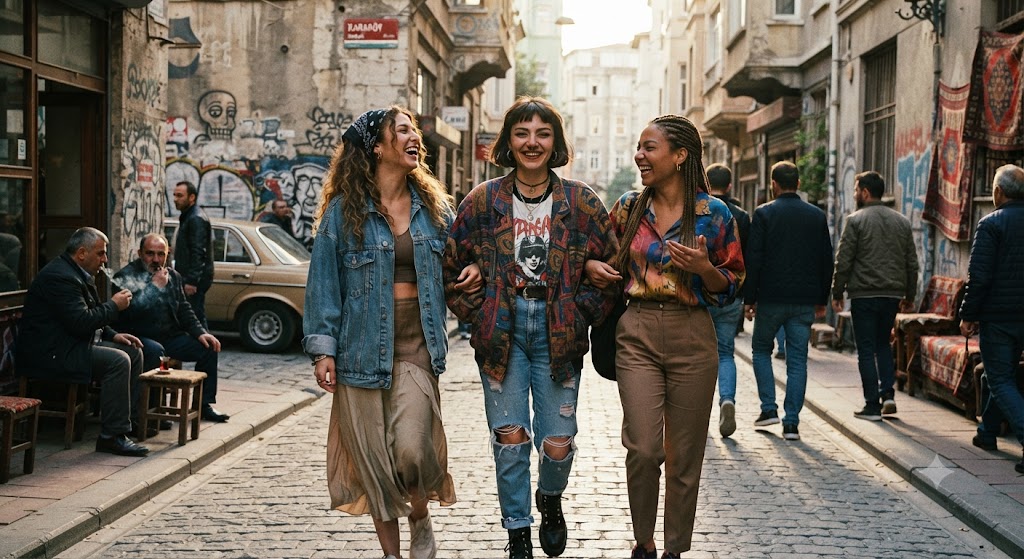
If you’ve recently searched for utanmazkızkar, you’re certainly not alone. The keyword has gained attention across search engines, social media, and blog discussions, leaving many people wondering what it actually means and why it keeps appearing online.
The reality is more nuanced than many articles suggest. Utanmazkızkar is associated with a Turkish expression related to “utanmaz kızlar,” literally translating to “shameless girls.” Depending on context, however, the phrase can function as an insult, a joke, social commentary, or—even in some online communities—a reclaimed expression of confidence and individuality. Like many internet expressions, its interpretation depends heavily on who is using it and why.
What Does Utanmazkızkar Mean?
The keyword utanmazkızkar appears to be a stylized or misspelled variation of the Turkish phrase “utanmaz kızlar.”
Breaking it down:
- Utanmaz = shameless, unashamed, brazen
- Kızlar = girls or young women
Combined, the literal translation becomes:
“Shameless girls.”
However, literal translations rarely capture the full cultural meaning.
In everyday Turkish conversations, the phrase has historically been used to criticize behavior considered socially inappropriate. Online, though, younger users sometimes employ it sarcastically, humorously, or even positively as a symbol of refusing outdated expectations.
Why Is Utanmazkızkar Trending?
Several factors have contributed to the growing search interest.
Social Media
The term frequently appears in:
- TikTok captions
- Instagram hashtags
- Twitter/X discussions
- Meme pages
- Viral videos
Many users encounter it without understanding the cultural background, leading them to search for its meaning.
Curiosity Around Turkish Internet Culture
Turkish slang and internet expressions increasingly spread internationally through:
- streaming platforms
- television dramas
- influencers
- online communities
As these expressions travel, search volume naturally increases.
Search Engine Curiosity
Because utanmazkızkar is unusual and emotionally charged, people often search simply to learn:
- Is it offensive?
- Is it slang?
- Does it describe a movement?
- Why are people using it?
The Linguistic Origin
Understanding the word requires a little Turkish language knowledge.
Utanmak
The Turkish verb utanmak means:
- to feel shame
- to be embarrassed
From this comes:
Utanmaz
meaning:
- shameless
- without embarrassment
- brazen
Meanwhile:
Kız
means:
- girl
and
Kızlar
means:
- girls.
The keyword itself is not considered standard Turkish spelling but rather an online variation or misspelling connected to the better-known phrase.
Historical Meaning
Traditionally, phrases like utanmaz kızlar carried negative social implications.
They were often directed toward women who were perceived to challenge traditional expectations surrounding modesty, behavior, or public appearance. In conservative settings, the phrase functioned as a judgment rather than a neutral description.
Examples included criticism of:
- clothing choices
- outspoken opinions
- public behavior
- relationships
- independence
This historical context is important because it explains why the phrase can still be considered offensive depending on who says it and how it is used.
Modern Online Usage
Language evolves.
Many internet communities now reinterpret old expressions in entirely different ways.
Online, utanmazkızkar may appear in contexts such as:
Humor
Friends joking with one another.
Memes
Ironically exaggerating confidence or boldness.
Self-Expression
Some women use similar expressions to signal confidence rather than shame.
Satire
Criticizing social expectations.
The intended meaning changes dramatically depending on context.
Why Context Matters
One reason the keyword generates confusion is that identical words can communicate completely different ideas.
Consider these situations.
Negative Use
Someone labels another person “utanmaz.”
The intention may be:
- criticism
- insult
- disapproval
Neutral Use
Someone discusses the phrase academically.
No insult is intended.
Reclaimed Use
Certain online communities intentionally use historically negative labels as expressions of confidence or resistance to social expectations. This pattern is common across many languages and cultures, though acceptance varies widely.
Is Utanmazkızkar Offensive?
There is no universal answer.
Generally:
It can be offensive when directed at someone as an insult.
However,
it may also be used:
- sarcastically
- humorously
- ironically
- as self-description within certain communities
Because of these differing interpretations, it is wise to understand the surrounding conversation before using the term yourself.
Common Places Where You May Encounter the Keyword
You may see utanmazkızkar on:
- TikTok
- YouTube comments
- discussion forums
- meme pages
- Turkish entertainment blogs
- search engine suggestions
Sometimes the keyword appears because of SEO-driven articles explaining its meaning rather than because it is commonly spoken in everyday conversation.
Misconceptions About Utanmazkızkar
It Always Means Feminism
Not necessarily.
Some discussions connect the phrase to women’s empowerment, but many uses are simply humorous or colloquial.
It Is Always an Insult
Again, context matters.
Some people use it affectionately among friends.
Others use it critically.
It Is an Official Turkish Word
No.
The spelling utanmazkızkar is not standard Turkish. It appears to be an online variation or misspelling related to “utanmaz kızlar.”
Cultural Significance
The popularity of utanmazkızkar illustrates how internet culture reshapes language.
Terms that once carried primarily negative meanings can acquire new interpretations through:
- memes
- online communities
- social movements
- digital humor
At the same time, traditional meanings do not disappear. Different generations and communities may interpret the same phrase very differently.
How Internet Slang Evolves
The journey of utanmazkızkar reflects a broader trend seen across many languages.
A typical evolution looks like this:
- Traditional expression
- Social media adoption
- Meme usage
- Viral search interest
- SEO articles
- International curiosity
This cycle explains why many obscure expressions suddenly become popular search terms.
Should You Use the Word?
Before using any culturally specific expression, consider:
- Who is your audience?
- Do they understand the context?
- Could it be interpreted as offensive?
- Are you quoting or describing rather than labeling someone?
When discussing the term academically or explaining its meaning, it is generally appropriate to provide the cultural context rather than using it to describe individuals.
Key Takeaways
- Utanmazkızkar is widely understood as an online variation related to the Turkish phrase “utanmaz kızlar.”
- The literal meaning is “shameless girls.”
- Historically, the phrase was used critically toward women who defied social expectations.
- Online usage varies widely, including humor, memes, satire, and in some communities, reclaimed self-expression.
- Context is essential. The same expression may be interpreted as insulting, playful, or empowering depending on how and where it is used.
Conclusion
The growing popularity of utanmazkızkar demonstrates how internet culture can transform language. A phrase rooted in traditional social criticism now appears in discussions about identity, humor, gender, and online expression. While some people still view it as derogatory, others use it ironically or as a symbol of confidence.
If you encounter utanmazkızkar online, avoid assuming a single meaning. Instead, consider the cultural background, the platform, and the intent of the speaker. Understanding the context will help you interpret the term more accurately and engage with Turkish digital culture in a respectful, informed way.
Frequently Asked Questions (FAQs)
1. What does utanmazkızkar mean?
It is commonly understood as a variation of the Turkish phrase “utanmaz kızlar,” literally meaning “shameless girls.” The exact interpretation depends on context.
2. Is utanmazkızkar an official Turkish word?
No. It is generally viewed as an online variation or misspelling rather than a standard Turkish dictionary entry.
3. Why is utanmazkızkar trending?
Interest has grown through social media, memes, Turkish online culture, and curiosity-driven searches, leading many people to look up its meaning.
4. Is utanmazkızkar offensive?
It can be. Historically it has been used as a derogatory label, though some online communities use related phrases humorously or as reclaimed expressions. Context is critical.
5. Can non-Turkish speakers use the term?
They can discuss or explain it, but using it to describe people without understanding its cultural implications may cause misunderstanding or offense.