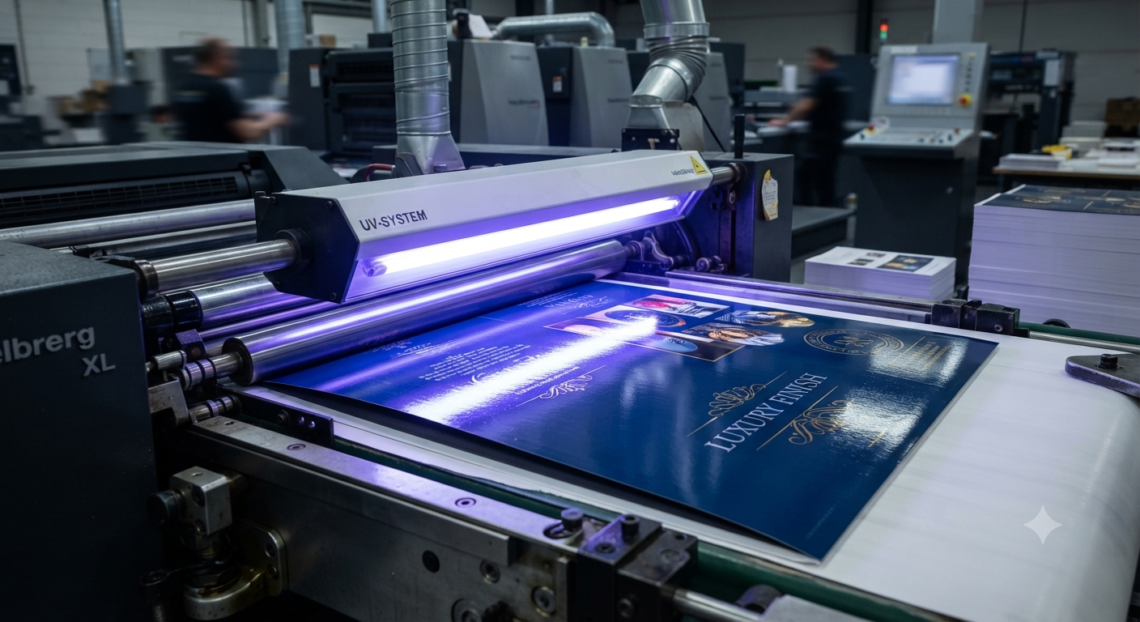
Uvlack is a specialized UV-curable lacquer coating designed to create a durable, attractive, and high-performance surface finish. It is widely used in industries such as printing, packaging, furniture, plastics, and product manufacturing because it delivers exceptional gloss, protection, and visual appeal.
Unlike traditional coatings that rely on air drying or heat evaporation, Uvlack uses ultraviolet (UV) light curing technology to instantly harden the coating surface. This process creates a strong protective layer that improves resistance against scratches, chemicals, moisture, and everyday wear.
Businesses use Uvlack not only for protection but also as a design enhancement tool. From premium product packaging to luxury catalogs and decorative furniture panels, UV lacquer helps products achieve a more polished and professional appearance.
This guide explains what Uvlack is, how it works, its different types, major applications, advantages, limitations, and how it compares with other finishing methods.
What Is Uvlack?
Uvlack refers to a UV-curable lacquer coating that is hardened using ultraviolet light. The term combines “UV,” referring to ultraviolet radiation, and “lack” (from the German word “Lack,” meaning lacquer or varnish).
The coating contains special photoreactive compounds that react when exposed to UV radiation. This reaction causes the liquid coating to transform into a solid, durable film within seconds.
Unlike conventional varnishes, which require drying time, Uvlack provides almost immediate curing. This makes it highly valuable in industrial environments where speed, consistency, and surface quality matter.
Common components of Uvlack include:
- Resins that create the protective film
- Photoinitiators that react with UV light
- Additives that improve flexibility, hardness, and appearance
- Pigments or special effects particles for decorative finishes
Because of its fast curing process and premium finish quality, Uvlack has become an important solution for manufacturers looking to improve both product durability and aesthetics.
How Does Uvlack Work?
The working principle behind Uvlack is based on UV curing technology. Instead of waiting for solvents or water to evaporate, the coating undergoes a chemical reaction when exposed to ultraviolet energy.
The process usually follows these steps:
1. Surface Preparation
Before applying Uvlack, the material surface must be clean and properly prepared. Dust, grease, or uneven surfaces can affect coating adhesion and final appearance.
Materials commonly prepared for Uvlack application include:
- Paper and cardboard
- Wood panels
- Plastic surfaces
- Printed materials
- Metal components
2. Application of UV Lacquer
The liquid Uvlack coating is applied using different industrial methods depending on the material and desired result.
Common application techniques include:
- Roller coating
- Spray coating
- Screen printing
- Flexographic coating
- Offset printing coating
The coating thickness is carefully controlled to achieve the required level of protection and visual effect.
3. UV Light Curing
After application, the coated surface passes under UV lamps. The ultraviolet energy activates the photoinitiators inside the lacquer.
This triggers a process called photopolymerization, where liquid molecules quickly bond together and form a hardened protective layer.
The result is:
- Fast drying
- High surface hardness
- Improved resistance
- Premium appearance
Types of Uvlack Finishes
Uvlack is available in several finishes depending on the desired appearance and functional requirements.
Gloss Uvlack
Gloss Uvlack creates a shiny, reflective surface that enhances colors and gives products a premium appearance.
It is commonly used for:
- Luxury packaging
- Magazine covers
- Product labels
- Marketing materials
The high-gloss effect makes printed colors appear deeper and more vibrant.
Matte Uvlack
Matte Uvlack produces a smooth, non-reflective finish with a sophisticated appearance.
It is often preferred for brands that want a:
- Modern look
- Soft-touch feeling
- Elegant packaging design
Matte coatings are popular in cosmetics, premium food packaging, and high-end product boxes.
Spot Uvlack
Spot Uvlack is applied only to specific areas rather than the entire surface.
For example, a designer may apply UV coating only to:
- Brand logos
- Product names
- Images
- Decorative patterns
This creates contrast between glossy and matte areas, helping important design elements stand out.
Textured Uvlack
Textured UV lacquer creates a unique surface feel by adding a physical pattern or raised effect.
It is used for:
- Luxury packaging
- Decorative panels
- Special edition products
The texture improves both visual appeal and user experience.
Main Applications of Uvlack
Uvlack is used across multiple industries because of its durability, appearance, and fast production advantages.
Uvlack in Printing and Packaging
The printing industry is one of the largest users of UV lacquer technology.
Packaging manufacturers use Uvlack to improve:
- Product appearance
- Print protection
- Shelf appeal
- Brand perception
Common examples include:
- Cosmetic boxes
- Pharmaceutical packaging
- Food cartons
- Beverage labels
- Retail product packaging
A well-designed Uvlack finish can make ordinary packaging appear more premium and professionally manufactured.
Uvlack for Furniture and Wood Surfaces
Furniture manufacturers use UV lacquer coatings to protect wooden surfaces while enhancing their appearance.
Applications include:
- Kitchen cabinets
- Flooring panels
- Decorative furniture boards
- Interior surfaces
The coating improves resistance against:
- Scratches
- Stains
- Moisture
- Daily usage damage
UV-coated furniture surfaces also maintain their appearance longer compared with untreated materials.
Uvlack in Plastic and Industrial Products
Manufacturers apply Uvlack to plastic components to improve surface performance and appearance.
Industrial applications include:
- Electronic housings
- Automotive interior parts
- Consumer product components
- Decorative plastic surfaces
The coating provides additional protection while allowing manufacturers to create different visual finishes.
Benefits of Using Uvlack
Uvlack has become popular because it combines performance benefits with attractive finishing options.
Fast Curing Process
One of the biggest advantages of Uvlack is its extremely fast curing time.
Traditional coatings may require hours or days to dry, while UV lacquer can harden within seconds after exposure to UV light.
This allows manufacturers to:
- Increase production speed
- Reduce waiting times
- Improve workflow efficiency
Superior Surface Protection
A cured Uvlack layer creates a strong protective barrier.
It helps surfaces resist:
- Scratching
- Abrasion
- Chemicals
- Moisture
- Fading
This makes products more durable during transportation, storage, and daily use.
Premium Visual Appearance
Uvlack enhances the appearance of finished products by creating a smooth and professional surface.
Benefits include:
- Higher gloss levels
- Better color depth
- Premium texture effects
- Improved product presentation
For brands competing in crowded markets, packaging appearance can strongly influence purchasing decisions.
Environmentally Friendly Advantages
Compared with some solvent-based coatings, Uvlack systems generally produce fewer volatile organic compounds (VOCs) because they cure through chemical bonding rather than solvent evaporation.
Additional benefits include:
- Less air pollution during production
- Reduced drying energy requirements
- Cleaner manufacturing environments
However, environmental performance depends on the specific formulation and production process.
Limitations of Uvlack
Although Uvlack offers many advantages, it also has some limitations.
Higher Initial Equipment Costs
UV curing requires specialized equipment, including:
- UV lamps
- Curing systems
- Safety controls
For small manufacturers, the initial investment can be higher compared with traditional coating methods.
Surface Compatibility Issues
Not every material works equally well with Uvlack.
Some surfaces may require:
- Primers
- Special preparation
- Adhesion testing
Without proper preparation, problems such as peeling or poor bonding may occur.
Limited Flexibility
Highly rigid UV coatings may crack when applied to materials that bend frequently.
For flexible products, manufacturers need specially formulated UV coatings designed for movement.
Uvlack vs Traditional Varnish
Many businesses compare Uvlack with conventional varnish because both provide surface protection.
| Feature | Uvlack | Traditional Varnish |
|---|---|---|
| Drying method | UV curing | Air drying or evaporation |
| Drying speed | Seconds | Hours |
| Surface hardness | Very high | Moderate |
| Production speed | Faster | Slower |
| Equipment cost | Higher | Lower |
| Finish quality | Premium | Standard |
Uvlack is usually preferred for high-volume manufacturing and premium products where appearance and durability are priorities.
Uvlack vs Lamination
Lamination involves applying a plastic film over a surface, while Uvlack creates a protective liquid coating.
Uvlack Advantages:
- Thinner coating
- Faster application
- More design flexibility
- Better for detailed printing effects
Lamination Advantages:
- Strong physical barrier
- Excellent protection against heavy handling
- Suitable for specific packaging requirements
The right choice depends on the product type and required performance.
How to Choose the Right Uvlack Finish
Selecting the correct Uvlack depends on several factors.
Consider:
Product Purpose
A luxury product box may require a glossy or spot UV effect, while industrial components may need maximum durability.
Surface Material
Different materials require different coating formulas for proper adhesion.
Desired Appearance
Choose between:
- Gloss for premium shine
- Matte for elegance
- Spot UV for visual contrast
- Texture effects for unique designs
Production Requirements
Manufacturers should evaluate:
- Production speed
- Equipment availability
- Cost expectations
- Long-term durability needs
Future Trends in Uvlack Technology
The Uvlack industry continues to develop as manufacturers demand faster production and improved sustainability.
Emerging trends include:
- More eco-friendly UV formulations
- Energy-efficient curing systems
- Advanced textured finishes
- Improved flexible UV coatings
- Digital printing compatibility
As packaging and product design become increasingly competitive, UV coating technology will continue playing an important role in creating attractive and durable surfaces.
Frequently Asked Questions About Uvlack
What is Uvlack used for?
Uvlack is used as a protective and decorative UV-curable lacquer coating. It is commonly applied to packaging, printed materials, furniture surfaces, plastics, and industrial products to improve durability and appearance.
Is Uvlack better than regular varnish?
Uvlack offers faster curing, higher surface hardness, and premium finishing compared with many traditional varnishes. However, regular varnish may still be suitable for low-cost applications where advanced performance is not required.
How long does Uvlack take to dry?
Unlike conventional coatings, Uvlack does not require long drying periods. Once exposed to UV light, it can cure within seconds, making it ideal for fast manufacturing processes.
Can Uvlack be applied to wood?
Yes. Uvlack is commonly used on wooden surfaces such as furniture panels, flooring materials, and decorative boards. It improves resistance against scratches, stains, and moisture.
Is Uvlack environmentally friendly?
Uvlack can offer environmental advantages because many UV coatings contain low VOC levels and require less drying energy. However, environmental impact depends on the specific formulation and manufacturing process.
Final Thoughts on Uvlack
Uvlack has transformed surface finishing by combining fast curing technology, strong protection, and premium visual effects. Its ability to improve durability while enhancing product appearance makes it valuable across printing, packaging, furniture, and industrial applications.
For businesses choosing a coating solution, the right approach is to evaluate the material, required durability, design goals, and production needs before selecting a Uvlack finish.
Whether the goal is creating luxury packaging, protecting furniture surfaces, or improving industrial products, Uvlack provides a modern finishing solution built for performance and visual impact.