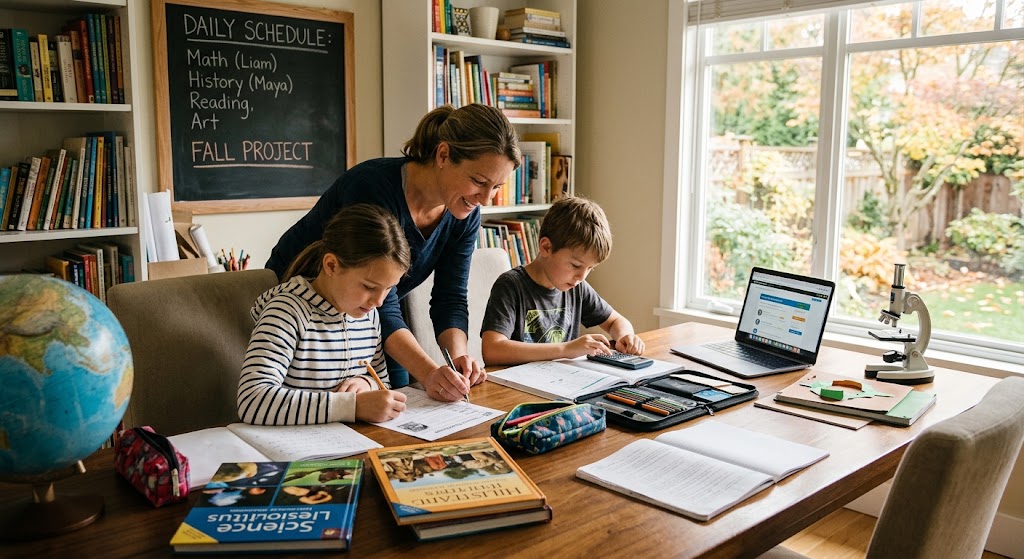
Homeschool is an educational approach where parents, guardians, or dedicated educators take responsibility for a child’s learning outside the traditional classroom environment. Rather than following a fixed school schedule, families create personalized learning experiences based on a student’s abilities, interests, pace, and goals.
Over the last several years, this alternative education model has gained attention from families seeking greater flexibility, customized instruction, and more control over their children’s academic development. It is no longer limited to a single teaching style or family type. Today, homeschool communities include families from diverse backgrounds with different educational philosophies.
The biggest difference between home-based education and conventional schooling is personalization. A student who struggles with mathematics can spend additional time building foundational skills, while a student passionate about science can explore advanced topics earlier than a standard classroom may allow.
Key features of modern homeschool education include:
- Personalized learning plans designed around individual student needs.
- Flexible schedules that allow learning to happen at different times and locations.
- Parent-led instruction combined with online resources, tutors, and educational programs.
- Interest-based learning that connects academic subjects with real-world experiences.
Why Families Choose Homeschool Education
Families choose homeschool for many different reasons. There is rarely one universal motivation. Some parents want academic flexibility, while others are looking for a learning environment that better matches their child’s personality and learning style.
Personalized Learning Experiences
One of the strongest advantages of homeschool is the ability to adapt education to the learner. Traditional classrooms often require teachers to follow a shared curriculum pace, which may not suit every student.
A personalized approach allows parents to identify:
- A child’s strongest learning methods.
- Areas where additional support is needed.
- Subjects that inspire curiosity and creativity.
- The appropriate academic pace.
This level of customization can help students develop confidence because they are not constantly comparing themselves with classmates.
Flexible Schedules for Real-Life Learning
A major reason families consider homeschool is schedule freedom. Learning does not have to happen only between morning and afternoon classroom hours.
Families can design routines around:
- Travel opportunities.
- Medical requirements.
- Athletic training.
- Creative projects.
- Family responsibilities.
This flexibility does not mean less structure. Successful programs usually depend on consistent routines, clear goals, and organized planning.
A Stronger Focus on Individual Development
Education is not only about test scores. Many parents value the opportunity to focus on communication skills, independence, problem-solving, and personal responsibility.
A well-designed homeschool environment can encourage students to become active participants in their education rather than passive recipients of information.
How Homeschool Works: Common Educational Methods
There is no single formula for successful home education. Families often combine different approaches depending on their philosophy, available resources, and the child’s needs.
Traditional Homeschool Curriculum Approach
Some families prefer a structured model that closely resembles traditional schooling. They use textbooks, lesson plans, assignments, quizzes, and scheduled study periods.
This approach may include:
- Mathematics textbooks.
- Language arts programs.
- Science experiments.
- History lessons.
- Writing assignments.
It provides clear organization and can be helpful for families transitioning from traditional schools.
Unschooling Method
Unschooling takes a more flexible approach by allowing children’s interests to guide learning. Instead of following a predetermined curriculum, parents create opportunities for exploration and discovery.
For example:
- A child interested in cooking may learn measurements, chemistry, and nutrition.
- A student interested in robotics may study engineering, coding, and mathematics.
- A love of animals may lead to biology research and environmental studies.
The goal is to make learning naturally connected to curiosity.
Online Learning and Hybrid Education
Technology has transformed homeschool possibilities. Many families now combine parent instruction with online classes, digital courses, and virtual tutoring.
Hybrid learning models may include:
- Online mathematics platforms.
- Virtual classrooms.
- Educational videos.
- Interactive science simulations.
- Language learning applications.
These tools can provide expert instruction while allowing families to maintain educational flexibility.
Creating a Successful Homeschool Plan
A strong education plan requires preparation. Many beginners focus heavily on curriculum selection but overlook organization, learning goals, and daily routines.
Step 1: Understand Educational Requirements
Before beginning homeschool, families should research local regulations. Requirements vary significantly depending on location.
Important areas to check include:
- Registration procedures.
- Required subjects.
- Assessment rules.
- Attendance expectations.
- Documentation requirements.
Understanding legal responsibilities prevents unnecessary problems later.
Step 2: Identify Learning Goals
Every student has different needs. Parents should consider short-term and long-term objectives.
Questions to ask:
- What skills should the student develop this year?
- Which subjects require more attention?
- Does the student prefer visual, practical, or discussion-based learning?
- Are there future college or career goals to consider?
Clear goals make planning much easier.
Step 3: Choose the Right Curriculum
Selecting materials is one of the most important decisions in homeschool planning. The best curriculum is not always the most expensive or popular one.
Consider:
- Student learning style.
- Teaching preferences.
- Academic level.
- Available time.
- Budget.
A flexible curriculum that can be adjusted is often more effective than a rigid program that creates unnecessary pressure.
Step 4: Build a Balanced Daily Routine
Successful learning environments usually have predictable routines. However, they should still allow flexibility.
A balanced schedule may include:
- Core academic subjects.
- Reading time.
- Creative activities.
- Physical exercise.
- Outdoor exploration.
- Independent projects.
The goal is consistent progress, not recreating a traditional classroom at home.
Benefits and Challenges of Homeschool
Like every educational option, homeschool has advantages and potential difficulties. Understanding both sides helps families make informed decisions.
Major Benefits
Academic customization: Students receive instruction based on their specific strengths and challenges.
Family involvement: Parents become closely connected to their child’s educational journey.
Learning flexibility: Families can adapt schedules and teaching methods when circumstances change.
Safe learning environment: Some families appreciate having greater control over social and academic surroundings.
Development of independence: Students often learn organization, research skills, and self-management.
Common Challenges
Time commitment: Parents must dedicate planning, teaching, and evaluation time.
Resource selection: Finding suitable materials can feel overwhelming.
Social opportunities: Families need to intentionally create opportunities for teamwork, friendships, and group activities.
Teaching confidence: Some parents worry they lack expertise in certain subjects.
These challenges can often be managed through local communities, online groups, co-ops, tutors, and educational networks.
Socialization in Homeschool: Addressing a Common Concern
One of the most frequent questions about homeschool involves social development. Critics sometimes assume that students learning at home lack interaction with peers, but social experiences depend largely on how families structure their environment.
Many students participate in:
- Sports teams.
- Community organizations.
- Volunteer programs.
- Music classes.
- Debate clubs.
- Local learning groups.
Social development is not limited to a single classroom setting. Meaningful interactions with different age groups can also help students develop communication and leadership skills.
Homeschool Curriculum Ideas by Age Group
Elementary-Level Learning
Young learners often benefit from hands-on activities and curiosity-driven exploration.
Common subjects include:
- Reading and writing foundations.
- Basic mathematics.
- Science experiments.
- Geography.
- Art and creativity.
At this stage, building confidence and enthusiasm for learning is often more important than rushing through content.
Middle School Learning
Middle school students can begin developing stronger independent study habits.
A balanced program may include:
- Advanced mathematics.
- Research projects.
- Laboratory science.
- Literature analysis.
- Technology skills.
Students can also begin exploring personal interests more deeply.
High School Learning
High school homeschool planning requires careful attention to academic goals. Students preparing for college or careers may need transcripts, standardized testing preparation, and advanced coursework.
Important areas include:
- Academic credits.
- Career exploration.
- Internships.
- College preparation.
- Specialized subjects.
A well-planned high school program can provide strong preparation for future opportunities.
How Parents Can Improve Their Homeschool Experience
Parents do not need to become perfect teachers. Effective educators focus on creating an environment where learning can happen consistently.
Helpful strategies include:
- Start simple: Avoid purchasing too many resources before understanding what works.
- Review progress regularly: Adjust methods when something is not effective.
- Encourage curiosity: Allow students to explore beyond textbooks.
- Connect with others: Join communities for support and ideas.
- Protect family relationships: Education should strengthen connection, not create constant stress.
The most successful homeschool experiences usually come from flexibility, patience, and continuous improvement.
FAQ About Homeschool
1. Is homeschool better than traditional school?
Homeschool is not automatically better or worse than traditional education. Its effectiveness depends on the student, family environment, teaching approach, resources, and consistency. Some students thrive with personalized instruction, while others benefit from a conventional classroom structure.
2. How much does homeschool cost?
The cost varies widely. Families may spend very little by using free resources, public materials, and library programs, while others invest in comprehensive curriculum packages, online courses, tutors, and extracurricular activities.
3. Do homeschool students receive recognized qualifications?
Recognition depends on local education laws and the pathway chosen by the family. Many students successfully earn diplomas, complete standardized testing, and attend universities after completing a properly documented program.
4. Can parents homeschool if they are not teachers?
Yes. Many parents without formal teaching credentials successfully educate their children. The key factors are preparation, willingness to learn, organization, and access to quality educational resources.
5. How do homeschool students make friends?
Students can build friendships through sports, community activities, clubs, volunteer work, co-ops, and local groups. Social opportunities require planning, but they are widely available.
Final Thoughts: Building a Successful Homeschool Journey
Homeschool gives families the opportunity to create an education experience built around the needs of a specific child. It offers flexibility, personalization, and the ability to connect learning with real-world experiences.
However, success does not come from simply removing a child from a traditional classroom. It comes from thoughtful planning, consistent routines, meaningful interaction, and a commitment to continuous growth.
If you are considering this path, start by researching your local requirements, understanding your child’s learning style, and creating a simple education plan. The best approach is not the most complicated one. It is the one that helps your child become curious, capable, and confident.